This lesson was designed to be used in a 3rd grade classroom during the language arts block. It was designed to teach students about sequencing in a narrative story with a mentor text as a guide.
Sequencing
Subject(s): This lesson was designed as a whole group lesson for 3rd grade students during
writing block.
Standard(s): 3.8 The student will write in a variety of forms to include narrative, descriptive, opinion, and expository.
Purpose/Why Learn This? To have students write a narrative story using transition words to help them keep their story in a logical sequence.
Materials Needed: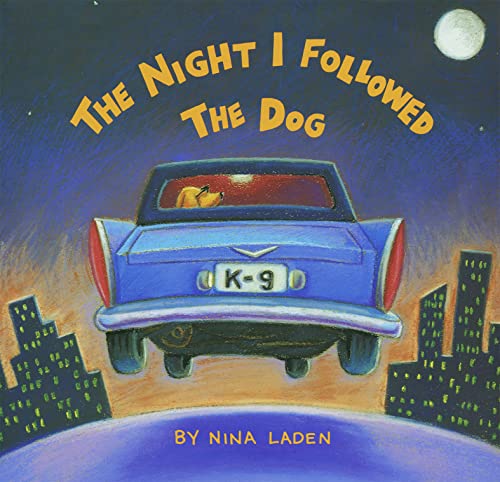
- Copy of The Night I Followed the Dog by Nina Laden
- Document Camera
- Sequence Graphic Organizer copied for each student
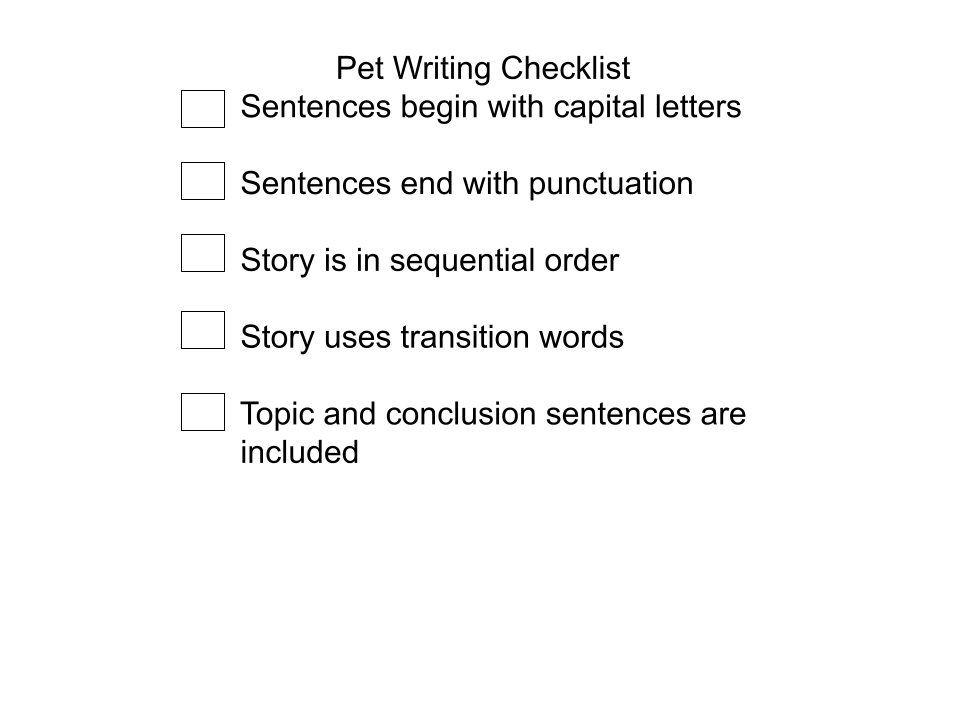
- Pet Writing Checklist copied for each student
Procedures:
1. Introduction – Say, “Today we are going to talk about how an author organizes their thoughts in order to create a story that readers can understand. This is called sequencing. Have you ever been telling a story to someone, but they really didn’t understand what you were talking about? Then you realize that you left out an important detail. Once you told them that detail it all made sense. An author’s job is to tell a story, but they aren’t there for you to ask questions. The author has to make sure they give you all the details, and in the right order so the story makes sense to the reader. Listen as I read aloud, ‘The Night I Followed the Dog’.”
2. Activities –
- I DO
After reading the story, say – “Now the author went in order with what happened 1st, what happened next and then finally what happened. I could take this graphic and I could rewrite the events that happened in the story. Watch as I fill it out.”
Begin filling out GO as you say, “I started noticing some strange behaviors from my dog, so one night I decided to follow him. This would be my topic sentence, it’s what my whole story will be about. First, I saw him in his dog house putting on a tuxedo and fumbling with a bow tie. Next, he got into a limousine and headed out to a part of the city I had never been to before and went into a strange building.”
- WE DO
Say, “The next box on my graphic organizer says finally. Who can help me write a sentence that can go in this section. Remember we are writing the story using sequencing, so the next sentence needs to be about what happened next in the story. Talk with your table partner and let’s see what you come up with together.”
Give students 2 minutes to talk with their partner.
Say, “Ok, who would like to share.” Call on volunteers, provide supportive feedback, and help create a sentence.
Write on the graphic organizer as you repeat the sentence the students helped to create.
Say, “Great, now we have sequenced the main part of our story. Who can look at our graphic organizer and tell me what I need to do now?”
Call on a volunteer. Say, “Yes, we need to wrap up our paragraph with a conclusion. We have talked about a concluding sentence before, remember we aren’t giving our reader any new information, but we are wrapping everything up with a nice bow on top. Who has an idea?”
Call on volunteers and help the students write a concluding sentence.
Say, “Now that my graphic organizer is filled out, I’m ready to write my paragraph. I need to follow along with my graphic organizer carefully and write slowly and carefully.”
Demonstrate how to create the paragraph from the graphic organizer.
Say, “Now that I’ve copied my paragraph, I need to read my work to make sure it looks and sounds just like I want it to. Read through the paragraph and fix mistakes.”
- YOU DO
Say, “Now it’s your turn. I want you to think about your pet, or a friend’s pet, and imagine that they have a secret night life. What adventures do you think they have? Where do they go? What happens when you follow them? Your story needs to make sense to readers because we will be sharing your stories with our kindergarten book buddies, so make sure you sequence your story and use your graphic organizer. After you are done sequencing your story and your graphic organizer is complete you may write your paragraph carefully like I did. I will be around to check on your progress. If you have a question or need help please raise a quiet hand and I will come over right away.”
Circulate around the room providing support and guidance as needed.
3. Conclusion – Say, “It looks like you all did a great job of sequencing your ideas so that your story can be understood by a reader. Please turn to your table mate and read your story to them. Make sure you check your work as you read and correct any periods or capital letters you might have missed. At the end, ask your partner if they have any questions or suggestions for you. When you have checked off all the boxes on your checklist and are ready to turn in your papers please put your graphic organizer and your story in the basket. I will take a look at them tonight and we will take them with us tomorrow when we go read to our book buddies.”
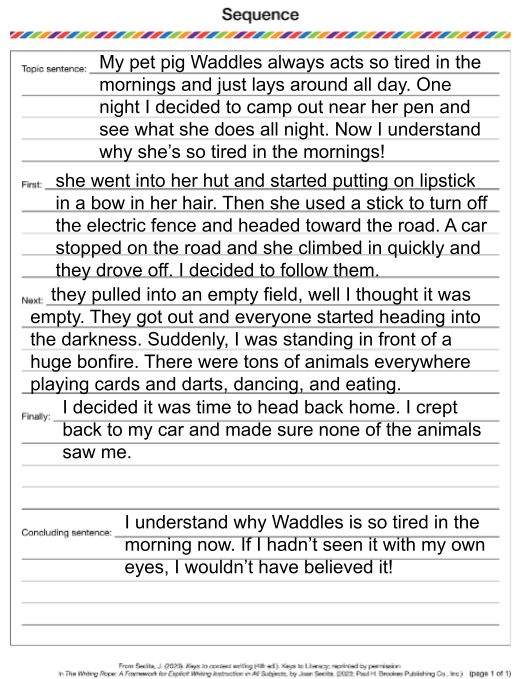
My pet pig Waddles always acts so tired in the mornings and just lays around all day. One night I decided to camp out near her pen and see what she does all night. Now I understand why she’s so tired in the mornings! First, she went into her hut and started putting on lipstick in a bow in her hair. Then she used a stick to turn off the electric fence and headed toward the road. A car stopped on the road and she climbed in quickly and they drove off. I decided to follow them. Next, they pulled into an empty field, well I thought it was empty. They got out and everyone started heading into the darkness. Suddenly, I was standing in front of a huge bonfire. There were tons of animals everywhere playing cards and darts, dancing, and eating. Finally, I decided it was time to head back home. I crept back to my car and made sure none of the animals saw me. I understand why Waddles is so tired in the morning now. If I hadn’t seen it with my own eyes, I wouldn’t have believed it!
Reflection: This lesson required me to really process and think about how I would use this story as a mentor text. I have used this story before as a sequencing lesson, but the focus was on reading and ordering the story. Having to flip it into a writing activity required me to walk through the process as a writer instead of a reader. I’m happy with it though, and think that my students will be able to come up with some creative stories about their pets. I also believe giving my students an authentic audience, their book buddies, will motivate them to do their best.